A few years ago, restaurant technology categories were relatively easy to understand.
- Reservation platforms managed bookings.
- Point-of-sale (POS) systems handled payments and restaurant operations.
- Delivery apps focused on takeaway and home delivery.
- Payment providers processed transactions.
Each type of software had a clearly defined role within the restaurant technology stack.
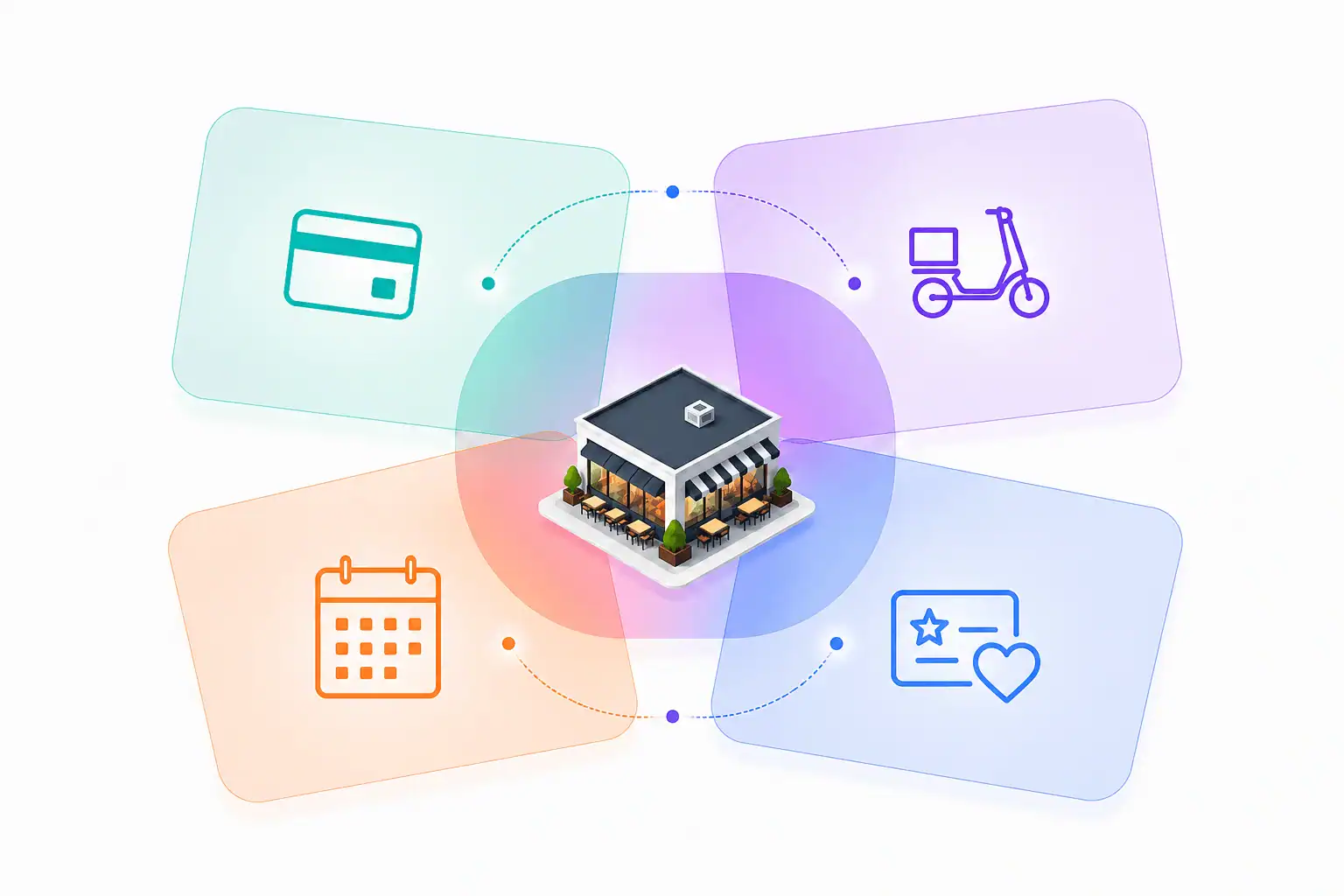
Today, those boundaries are becoming increasingly blurred.
Delivery platforms now offer restaurant reservations. Payment companies are acquiring reservation platforms. POS providers are embedding booking capabilities into their products, while loyalty, guest engagement and operational intelligence are becoming integrated into software that originally served a single purpose.
These developments don’t suggest that restaurant technology companies are abandoning their original products.
Instead, they suggest that many are expanding their role across a broader portion of the guest journey.
This article brings together several observations from across the hospitality technology ecosystem, exploring why restaurant technology providers are increasingly expanding beyond their traditional categories.
Restaurant software is becoming more than a single-purpose tool
Historically, restaurants assembled multiple specialist systems.
One platform managed reservations.
Another handled payments.
Another managed deliveries.
Another focused on loyalty.
Each system solved a specific operational challenge.
Recent announcements suggest that this model is evolving.
Rather than remaining focused on a single function, many hospitality technology providers are extending their capabilities into adjacent parts of the restaurant journey.
Payment companies are expanding into restaurant technology
One of the clearest examples comes from American Express.
The company has agreed to acquire TheFork from Tripadvisor for $700 million, adding more than 50,000 restaurants across 11 European countries to its dining portfolio. The acquisition follows its earlier purchases of Resy and Tock, significantly expanding American Express’s presence across restaurant discovery, reservations and guest engagement.
Traditionally, payment providers focused on processing transactions.
These acquisitions suggest that some are now becoming active participants throughout the dining experience, from discovering a restaurant to completing a reservation and paying the bill.
Delivery platforms are becoming booking platforms
A similar evolution is taking place in food delivery.
Deliveroo has launched Deliveroo Reservations through its integration with SevenRooms, enabling diners to book restaurant tables directly from within the delivery application. The feature is initially rolling out across London, with plans to expand across the UK.
Across North America, DoorDash has also entered the reservations market by launching DoorDash Reservations across Los Angeles, San Francisco and Boston, while extending its reach into the UK through Deliveroo Reservations.
Rather than focusing exclusively on off-premise dining, delivery platforms are increasingly participating in the broader restaurant experience.
Restaurant platforms are combining multiple capabilities
This expansion is also visible within restaurant software itself.
Lightspeed introduced Lightspeed Reservations, embedding booking management directly into its POS environment and reducing the separation between front-of-house operations and reservations.
Similarly, Clover Reserve combines payment infrastructure, reservations and restaurant operations within a single platform for full-service restaurants.
Meanwhile, OpenRice integrated the S⁺ REWARDS programme directly into its platform, bringing loyalty closer to restaurant discovery, while Olo introduced its first integrated loyalty solution alongside automated menu availability as part of its 2026 platform release.
Although these announcements address different parts of restaurant operations, they point towards the same direction.
Many hospitality technology providers are gradually evolving from specialised applications into broader platforms supporting multiple aspects of restaurant operations and guest engagement.
The guest journey is becoming the common thread
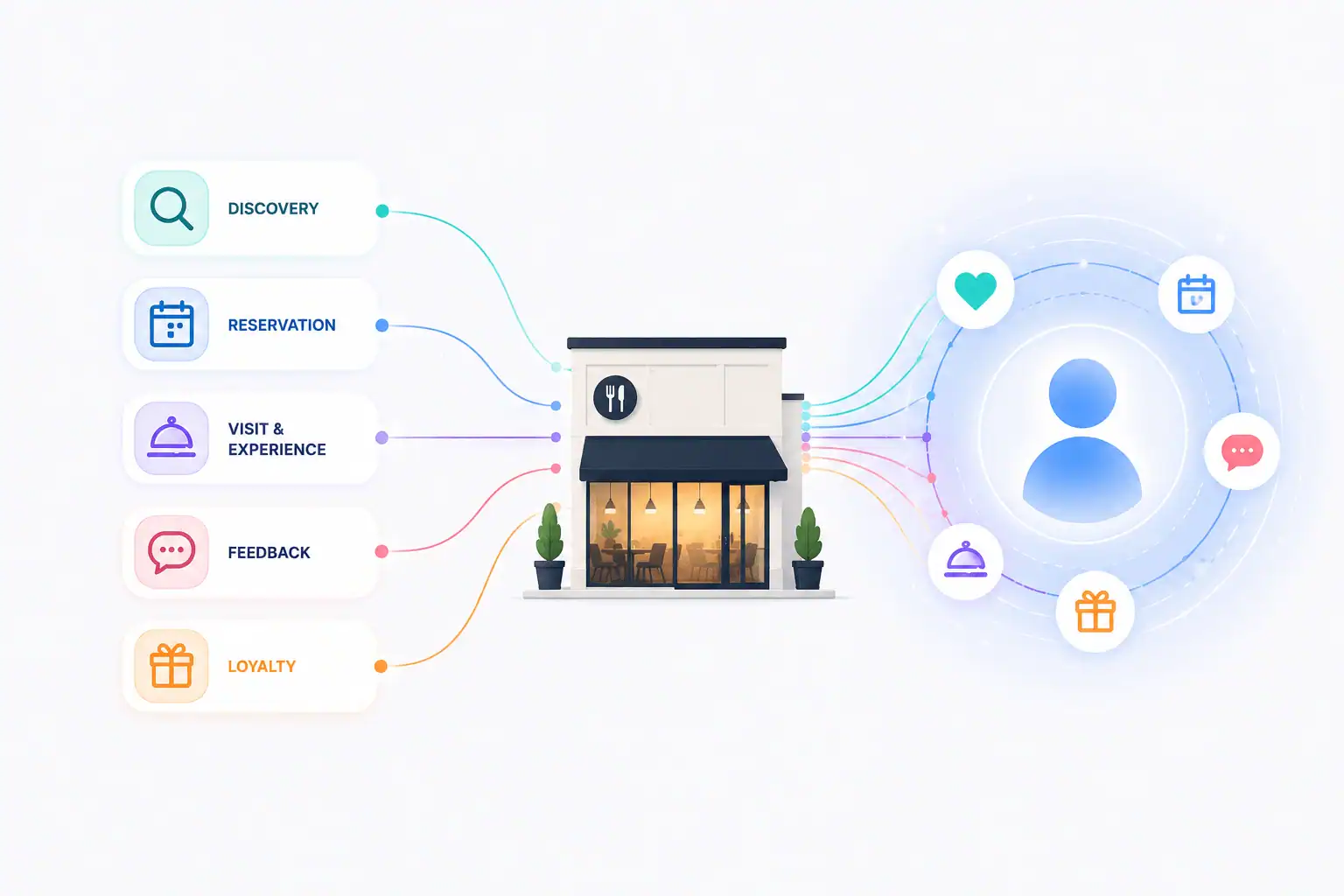
Looking across these developments, a common pattern begins to emerge.
Restaurant technology providers are increasingly expanding beyond the operational problem they originally set out to solve:
- Reservations increasingly connect with payments.
- Delivery platforms now support bookings.
- POS systems incorporate reservation management.
- Loyalty programmes integrate with restaurant discovery.
Rather than creating isolated experiences, companies appear to be extending their products across multiple stages of the guest journey.
For restaurants, this may simplify operations by reducing the number of disconnected workflows.
For technology providers, however, expanding into adjacent areas naturally increases the number of systems that need to exchange information.
Looking ahead
The examples highlighted in this article do not suggest that every restaurant technology provider is following the same strategy.
They do, however, illustrate a broader shift taking place across the hospitality technology ecosystem.
Restaurant software is gradually evolving beyond single-purpose applications into broader platforms that support multiple stages of the guest journey.
As these platforms continue to expand, restaurants will increasingly expect information to move seamlessly between reservations, POS systems, payments, loyalty programmes, delivery platforms and guest engagement tools.
Whether those connections are built directly, developed through partnerships or enabled by neutral integration platforms will remain an important strategic decision for hospitality technology providers.
Sources
This article brings together observations from announcements published across the hospitality technology ecosystem.
Restaurant platform expansion
- American Express — Acquisition of TheFork for $700 million
- Deliveroo — Deliveroo Reservations powered by SevenRooms
- DoorDash — DoorDash Reservations launch
- Lightspeed — Lightspeed Reservations
- Clover — Clover Reserve
- OpenRice — S⁺ REWARDS integration
- Olo — 2026 platform release with integrated loyalty and automated menu availability
About this article
This article is part of Mozrest Ecosystem Insights, a series exploring how the restaurant technology ecosystem is evolving.
Rather than commenting on individual announcements, Mozrest analyses publicly available product launches, partnerships and industry developments to identify recurring developments that may help restaurant technology providers better understand the market. The observations presented are evidence-based and intended to encourage discussion rather than provide market forecasts.
This article will be updated as new developments emerge across the restaurant technology ecosystem.
Continue Exploring the Restaurant Technology Ecosystem
The hospitality technology industry is evolving rapidly. Explore the other articles in the Mozrest Ecosystem Insights series.