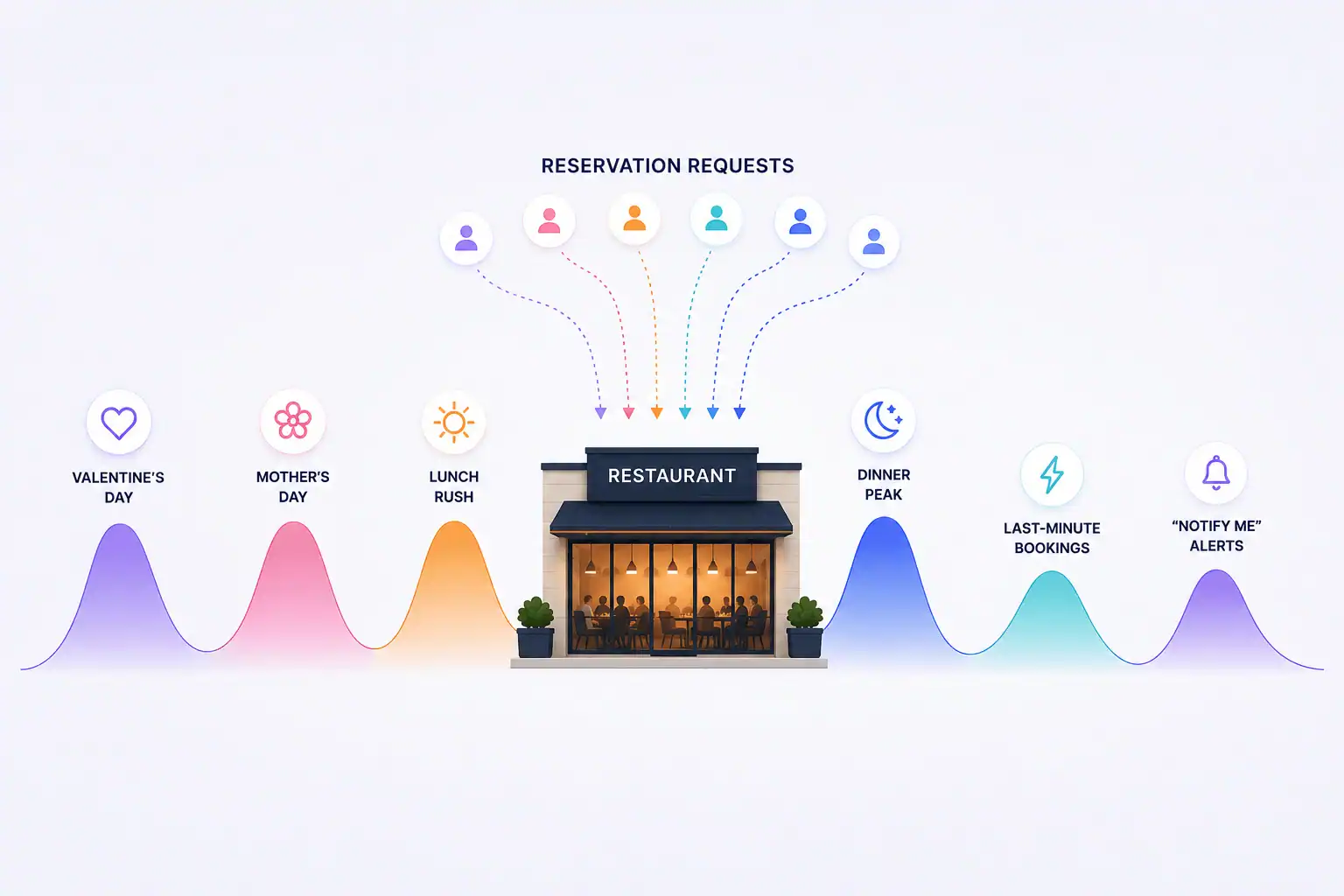
A few years ago, the journey to find a restaurant was relatively simple.
A diner searched on Google, visited a restaurant’s website or a reservation platform, booked a table and showed up for dinner.
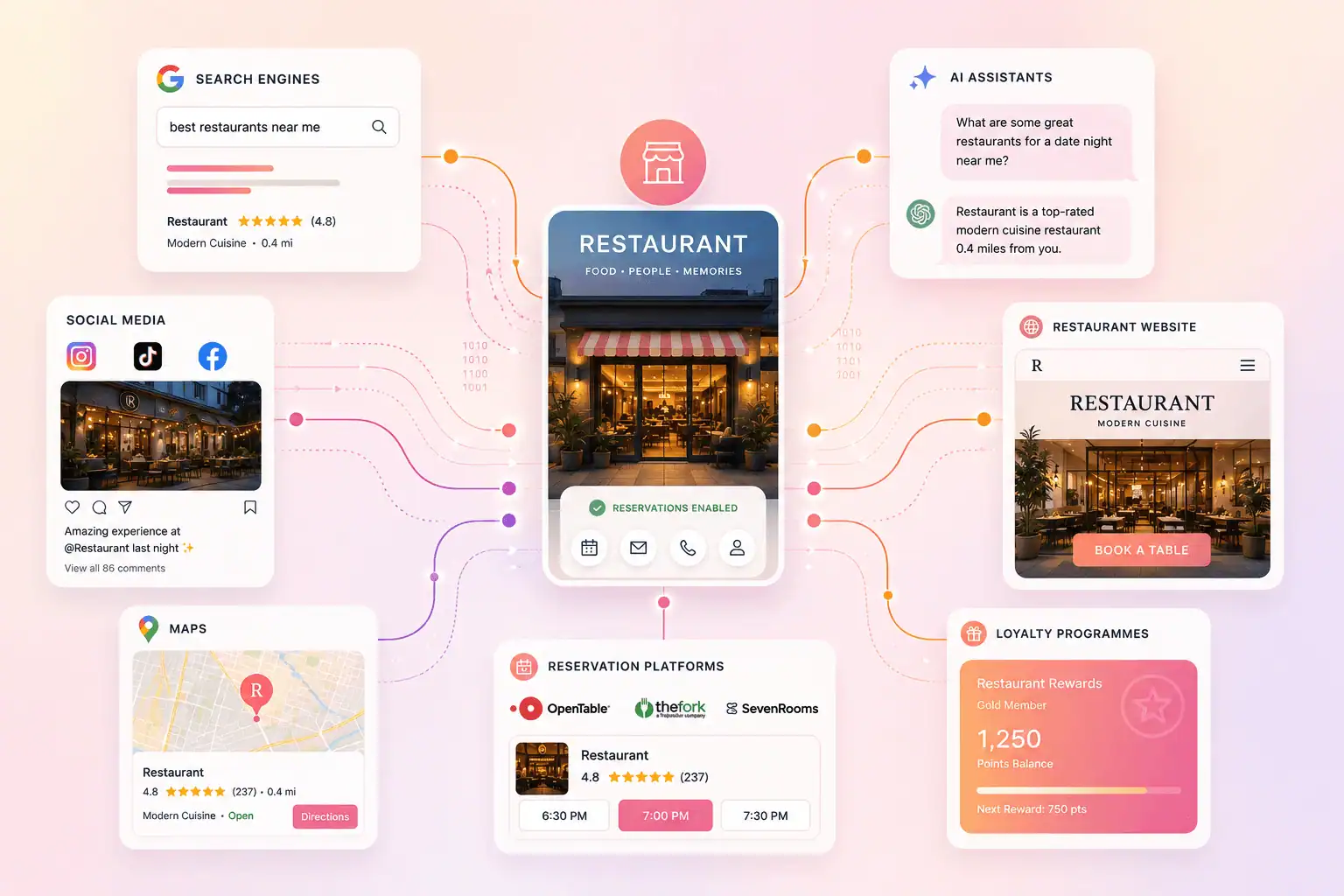
Today, that same diner might first discover a restaurant through ChatGPT or Alexa+, browse the MICHELIN Guide, check reviews on Google Maps, come across it on Instagram, and complete a reservation without ever visiting the restaurant’s own website.
Search, however, remains the starting point for many guest journeys.
According to Tablein, 58% of people rely heavily on search engines to find restaurants, highlighting the continued importance of search visibility even as new discovery channels emerge.
The guest journey hasn’t just become digital.
It’s become fragmented.
Over the past few months, we’ve noticed a growing number of announcements across the restaurant technology ecosystem pointing in the same direction. Reservation software providers, booking channels, and AI companies are finding new ways to help diners discover restaurants and complete reservations.
This article brings together some of those observations. It doesn’t attempt to predict the future or rank technology providers. Instead, it highlights a number of developments that may help restaurant technology companies better understand how diners are finding restaurants today.
1. Discovery is becoming more conversational
For years, restaurant discovery started with keywords.
Today, it increasingly starts with conversations:
- “Find a romantic Italian restaurant in Soho.”
- “Where can I book brunch this Sunday?”
- “Recommend a dog-friendly restaurant nearby.”
Instead of typing searches into a search engine, diners can increasingly ask AI assistants to recommend restaurants and make reservations on their behalf.
Recent announcements suggest this shift is gaining momentum. OpenTable is now available through ChatGPT, allowing users to discover restaurants and book tables using natural language. OpenTable has also introduced restaurant discovery through Alexa+ in the UK. Resy has integrated with Claude AI, while ResDiary has announced similar capabilities through Alexa+.
Although each platform has taken a different approach, they all aim to reduce the number of steps between deciding to eat out and securing a reservation.
For restaurant technology providers, conversational AI is becoming another discovery channel alongside search engines, maps, social media and reservation platforms.
2. Diners increasingly book where they discover
The boundary between discovering a restaurant and booking a table is becoming less distinct.
Instead of asking diners to leave one platform and complete their reservation elsewhere, more companies are embedding booking capabilities directly into the places where guests already spend their time.
DiningCity introduced Reserve with Meta, allowing restaurants to accept bookings through Instagram and Facebook. Dineplan became South Africa’s first Reserve with Google partner, enabling reservations directly from Google Search and Maps. Deliveroo has also expanded beyond food delivery by launching in-app restaurant reservations through its partnership with SevenRooms.
This evolution reflects changing diner behaviour. Servme reported that 94% of diners rely on online platforms such as Google to discover and book restaurants, highlighting the importance of making reservations available wherever guests begin their search.
Research published across the industry reinforces this evolution.
Libro reported that 83% of diners consider online booking availability when deciding where to eat, while foratable by Lunchgate found that more than half of restaurant reservations are now made digitally.
These developments don’t suggest that restaurant websites are becoming less important.
They suggest that diners increasingly expect to complete their reservation wherever they discover the restaurant.
3. Discovery is becoming more personal
Finding a restaurant has never been purely about location or cuisine.
Increasingly, it’s also shaped by previous experiences, rewards and personal preferences.
Research shared by Tablein found that 41% of customers are more likely to choose restaurants where they are already members of a loyalty programme, suggesting that guest relationships increasingly influence restaurant choice. OpenRice integrated the S⁺ REWARDS programme directly into its platform, bringing restaurant discovery and loyalty closer together. And OpenTable announced new capabilities to help restaurant groups build a more unified view of their guests.
These examples come from different parts of the hospitality technology ecosystem, but they share a common idea.
Restaurant discovery is becoming increasingly informed by guest data.
Rather than showing the same restaurants to everyone, platforms are gradually moving towards more personalised recommendations and experiences.
4. Discovery no longer ends with a reservation
For many years, making a reservation marked the end of the discovery journey.
Today, it often marks the beginning of a broader guest relationship.
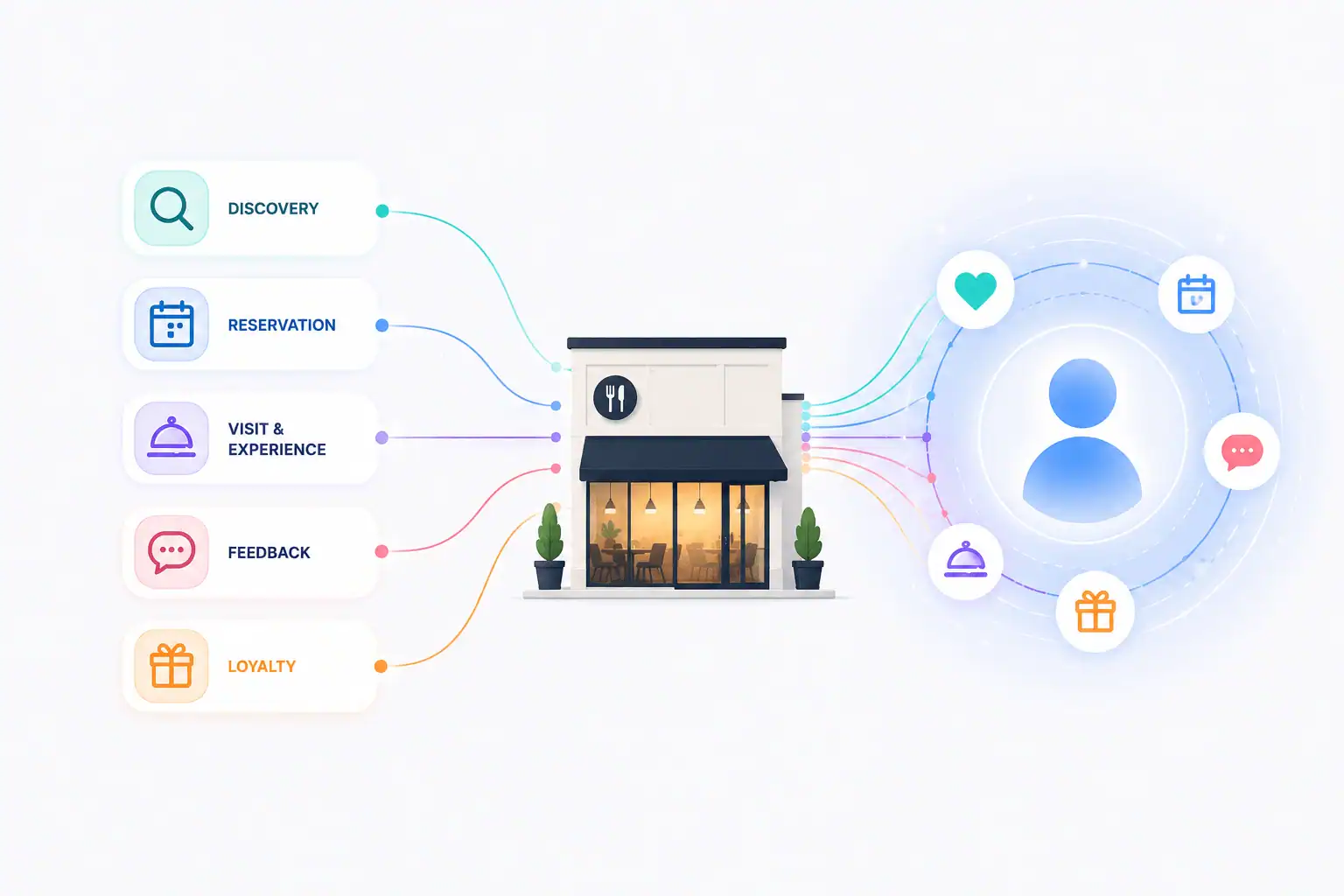
Reservation platforms increasingly offer opportunities to upsell experiences, capture guest preferences, encourage loyalty programme enrolment and collect post-visit feedback.
SevenRooms reported that offering prepaid upgrades during the booking process can increase revenue per cover by 16%, while TheFork introduced AI-powered sentiment analysis to help restaurants better understand guest feedback. Weeloy also reported that loyalty programmes can increase guest visit frequency by 20% to 35%.
In other words, restaurant discovery is no longer simply about helping diners choose where to eat.
It is becoming the first stage of a connected guest journey that continues well beyond the reservation itself.
Looking ahead
Restaurant discovery has always evolved alongside the way diners use technology.
That evolution appears to be accelerating.
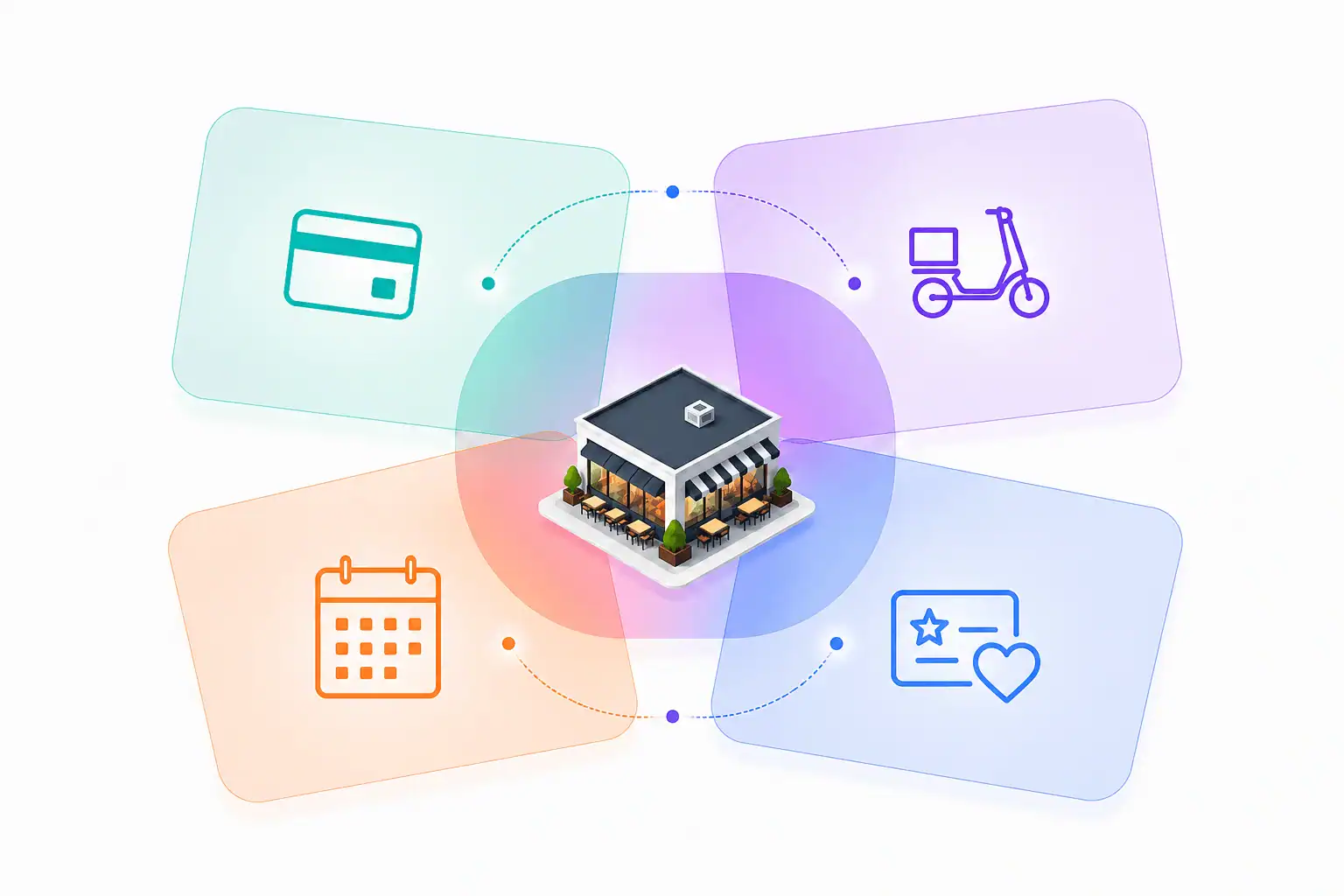
The developments highlighted in this article do not point to a single disruptive innovation. Instead, they illustrate a series of complementary changes taking place across the restaurant technology ecosystem.
Artificial intelligence is introducing new ways to discover restaurants. Social platforms and search engines are becoming booking channels. Guest data is enabling more personalised experiences, while reservations increasingly connect with loyalty, reviews and guest engagement.
For restaurant technology providers, several developments point in the same direction:
Restaurant discovery is no longer simply about helping diners choose where to eat.
It is becoming part of a connected digital journey that spans multiple platforms, technologies and guest touchpoints.
As the ecosystem continues to evolve, it will be interesting to see how restaurants and technology providers adapt to meet changing guest expectations.
Sources
This article brings together observations from announcements, product launches and research published by companies across the restaurant technology ecosystem. The sources below provide additional context for the developments discussed throughout the article.
AI-powered restaurant discovery
- OpenTable — ChatGPT integration
- OpenTable — Alexa+ integration
- Resy — Claude AI integration
- ResDiary — Alexa+ restaurant discovery and reservations
Restaurant discovery and booking channels
- Tablein — 58% of people rely heavily on search engines to find restaurants
- Servme — 94% of diners rely on online platforms such as Google to discover and book restaurants
- DiningCity — Reserve with Meta
- Dineplan — South Africa’s first Reserve with Google partner
- Deliveroo — Deliveroo Reservations powered by SevenRooms
- Libro — Online reservations influence restaurant choice
- foratable by Lunchgate — Guest Behaviour Report 2025
Guest engagement and personalisation
- Tablein — 41% of customers gravitate toward restaurants where they are members of a loyalty program
- OpenRice — S⁺ REWARDS integration
- OpenTable — Unified guest profiles with Loyalist
- SevenRooms — Prepaid booking upgrades increase revenue per cover by 16%
- TheFork — AI-powered sentiment analysis with Fullwhere
- Weeloy — Loyalty programmes and guest retention
About this article
This article is part of Mozrest Ecosystem Insights, a series exploring how the restaurant technology ecosystem is evolving.
Rather than reporting individual announcements, Mozrest analyses publicly available research, product launches and partnerships from across the industry to identify recurring developments that may help restaurant technology providers better understand the market. The observations presented are evidence-based and intended to encourage discussion rather than provide market forecasts.
This article will be updated as new developments emerge across the restaurant technology ecosystem.