Restaurant reservations used to be relatively straightforward.
Guests booked a table.
The restaurant confirmed the reservation.
The guest arrived for dinner.
Today, reservation systems play a much broader role.
Restaurants are using them to anticipate demand, reduce no-shows, optimise occupancy, generate additional revenue and better understand guest behaviour. At the same time, diners increasingly expect to book instantly, modify reservations online and secure tables at the moments that matter most.
Over the past few months, we’ve noticed a growing number of announcements, research studies and product launches across the restaurant technology ecosystem pointing in the same direction. Reservation platforms are no longer simply managing bookings. They are becoming demand management tools.
This article brings together some of those observations. It doesn’t attempt to rank reservation platforms or predict the future. Instead, it highlights seven developments that may help hospitality technology providers better understand how restaurant demand is evolving.
1. Digital reservations have become the default
For many diners, booking a restaurant is no longer a phone call.
It starts online.
Research published across the industry reflects this shift. Servme reported that 94% of diners rely on online platforms such as Google to discover and book restaurants, highlighting how closely restaurant discovery and reservations are now connected. Libro also found that 83% of diners consider online booking availability when deciding where to eat, while foratable by Lunchgate reported that more than half of restaurant reservations are now made digitally.
Rather than being an optional convenience, online reservations have become an important part of how restaurants attract guests.
2. Restaurants are planning for predictable demand peaks
Demand is not evenly distributed throughout the year.
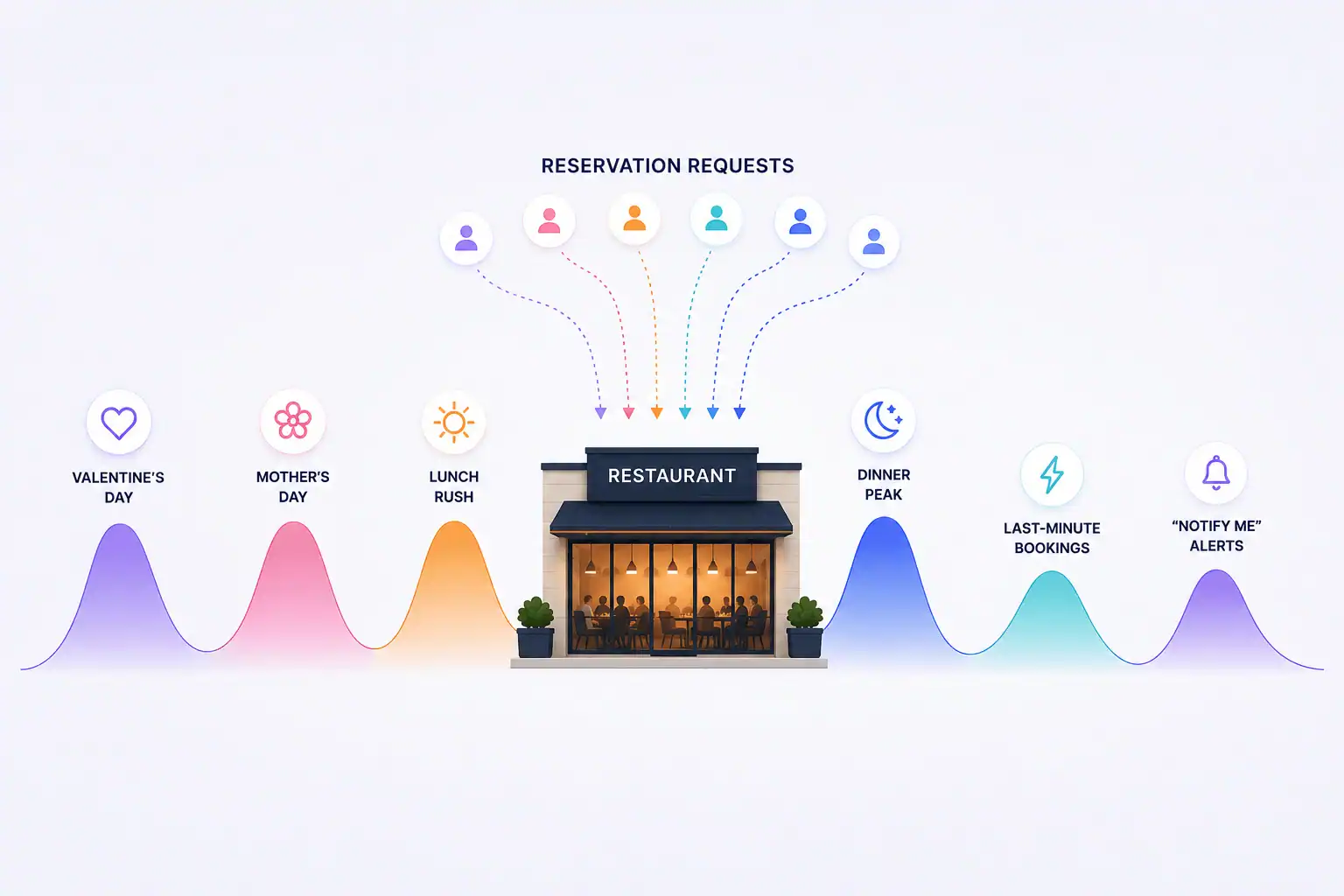
Events such as Valentine’s Day and Mother’s Day continue to generate significant booking activity, encouraging restaurants to prepare well in advance.
Recent announcements from reservation providers highlighted strong demand around these occasions, demonstrating how booking platforms increasingly help restaurants anticipate high-demand periods rather than simply recording reservations as they happen.
Seasonal demand is becoming more predictable, allowing restaurants to plan staffing, inventory and guest experiences more effectively.
3. Every table matters more than ever
Managing demand is no longer just about filling tables.
It is about making the best use of available capacity.
Research shared across the ecosystem continues to highlight the operational impact of no-shows and late cancellations. Reservation platforms are responding by introducing waitlists, automated guest communications, deposits and booking policies designed to help restaurants maximise occupancy.
As operating costs continue to rise, making full use of available tables is becoming an increasingly important objective for restaurants.
4. Reservations are becoming a revenue opportunity
A reservation no longer simply secures a table.
It can also create additional revenue before the guest even arrives.
Tablein reported that 30% of guests purchase add-ons when they are offered during the booking process, increasing average spend by 10%. SevenRooms similarly found that prepaid upgrades can increase revenue per cover by 16%.
Rather than treating reservations as an administrative task, restaurants are increasingly using the booking journey to introduce experiences, upgrades and other revenue opportunities.
5. Guest behaviour is becoming easier to understand
Every reservation creates valuable information.
When guests book.
How often they return.
Which services they choose.
Reservation platforms are increasingly helping restaurants analyse these patterns to better understand demand throughout the week, identify busy periods and adapt operations accordingly. Research published across the industry illustrates how booking behaviour varies by day, service period and occasion, providing restaurants with richer operational insights than were previously available.
Reservation data is becoming an important source of business intelligence rather than simply a booking record.
6. Guests expect more flexibility
Booking a table is no longer the final step.
Guests increasingly expect to modify, cancel or update reservations online without contacting the restaurant directly.
Reservation providers continue to introduce self-service features that give diners greater control over their bookings while reducing the administrative workload for restaurants.
This reflects a broader shift towards more flexible guest experiences throughout the reservation journey.
7. Demand management is becoming a competitive advantage
Taken individually, these developments may appear unrelated.
Together, they point towards a broader evolution.
Digital bookings are becoming standard.
Restaurants are preparing for predictable demand peaks.
Reservation journeys are generating additional revenue.
Guest behaviour is providing richer operational insights.
Booking experiences are becoming increasingly flexible.
In other words, reservation platforms are evolving from booking systems into demand management platforms that help restaurants balance occupancy, improve revenue and deliver better guest experiences.
Looking ahead
Restaurant reservations have always been about matching guests with available tables.
Today, they are increasingly helping restaurants anticipate demand, optimise operations and strengthen guest relationships before the first visit even begins.
The developments highlighted in this article do not suggest that every restaurant will adopt the same strategy.
They do, however, illustrate a broader evolution taking place across the hospitality technology ecosystem.
As guest expectations continue to evolve, demand management is becoming an increasingly important capability for reservation platforms and the restaurants that rely on them.
Sources
This article brings together observations from research, product announcements and industry updates published across the restaurant technology ecosystem.
- Servme — 94% of diners rely on online platforms to discover and book restaurants.
- Libro — 83% of diners consider online booking availability when choosing a restaurant.
- foratable by Lunchgate — Guest Behaviour Report 2025.
- Tablein — Booking add-ons: 30% purchase rate and 10% higher average spend.
- SevenRooms — Prepaid booking upgrades increase revenue per cover by 16%.